.png)
Do Dental Implants Look and Feel Like Real Teeth?
September 2026
It's one of the first questions patients ask when they're considering dental implants, and it's a reasonable one. Losing a tooth affects more than just the appearance of your smile. It changes how you speak, how you chew, how the surrounding teeth and bone behave over time, and, in many cases, how you feel about yourself in social and professional situations. Implants are widely regarded as the gold standard for tooth replacement, and the claim that they look and feel like natural teeth is repeated often enough that it can start to sound like marketing language. So it's worth breaking down what that actually means clinically, where implants genuinely deliver on that promise, and where patient expectations sometimes need to be calibrated.
How Dental Implants Are Structured, and Why It Matters
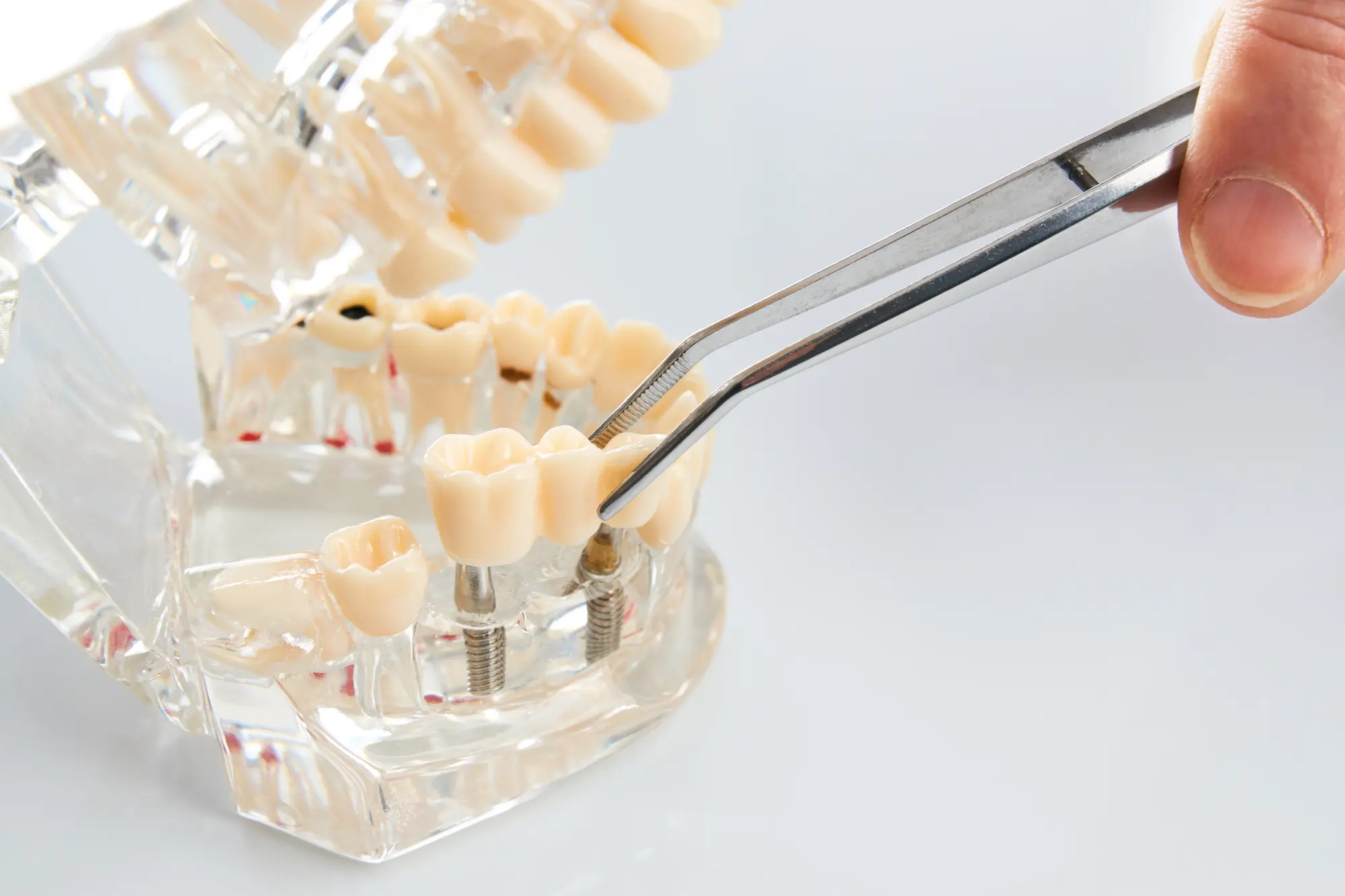
To understand why implants function so differently from other tooth replacement options, it helps to understand what they actually are. A dental implant is not simply an artificial tooth. It's a three-component system designed to replicate the entire structure of a natural tooth from the root level upward. The implant fixture itself is a small titanium post, typically threaded, that is surgically placed into the alveolar bone at the site of the missing tooth. Over a period of weeks to a few months, this fixture undergoes a process called osseointegration, in which the surrounding bone tissue grows in direct contact with the titanium surface, anchoring the implant as firmly as a natural tooth root.
Once osseointegration is confirmed and the implant is fully stable, an abutment is attached to the fixture. This component emerges through the gingival tissue and serves as the connection point between the implant and the final restoration. The restoration, typically a porcelain crown, custom-fabricated to match the shape, size, and shade of the adjacent natural teeth, is then secured to the abutment. The result is a restoration that:
- Is anchored in the bone rather than resting on the gum tissue or relying on adjacent teeth for support
- Stimulates the alveolar bone through functional loading, helping to preserve bone volume over time
- Maintains it’s position, remaining stable during function over time
- Restores the full occlusal surface of the missing tooth, allowing normal biting and chewing mechanics
This structural integrity is what separates implants from removable partial dentures and traditional bridges, and it is the foundation of why implants feel so much more like natural teeth to most patients.
The Aesthetic Result: What Modern Implant Restorations Can Achieve
From a purely visual standpoint, a well-executed implant restoration is virtually indistinguishable from a natural tooth in most clinical situations. The porcelain crown placed over the implant can be shaded and shaped to match the surrounding dentition with a high degree of precision. Modern ceramic materials have optical properties, including translucency, light reflection, and surface texture, that closely mimic natural enamel, particularly under the variable lighting conditions of everyday life.
That said, the esthetic outcome of an implant restoration depends heavily on several factors beyond the crown itself:
- Gingival architecture: The shape and contour of the gum tissue around the implant crown plays a critical role in how natural the result looks. When an implant is placed in the anterior region, the emergence profile of the crown through the tissue needs to be carefully shaped to replicate the natural gingival contour of a tooth. This is a nuanced aspect of implant dentistry that requires attention during both the surgical and restorative phases.
- Bone volume at the implant site: Patients who have had a tooth missing for an extended period often experience resorption of the alveolar bone and recession of the overlying gum tissue. If significant volume has been lost, bone grafting and soft tissue management may be needed prior to or concurrent with implant placement to achieve an optimal esthetic result.
- Adjacent tooth characteristics: The shade, translucency, and surface texture of the natural teeth surrounding the implant site influence how the final crown is designed. In patients with highly characterized or aged enamel, matching these nuances requires a skilled ceramist and careful communication between the restorative dentist and the dental laboratory.
When these factors are managed well, the result is a restoration that patients, and often other clinicians, cannot distinguish from a natural tooth at conversational distance or in photographs.
At Doral Select Dentistry, we have the technology that allows us to perform a fully-guided implant procedure in almost all clinical situations, meaning that we plan the position of your implant based on the ideal position of the final restoration. We take a pre-operative digital scan of your teeth and gums and combine that with a 3D radiograph of your jaw structure (CBCT) before your implant placement. When you arrive for placement, we know the exact shape, size, and angulation needed for ideal positioning of your implant to maximize success. We also work with several specialist dental laboratories and master ceramists, which allows us to produce and deliver high esthetic restorations that mimic your natural tooth shape, unique hues, and character.
How Implants Feel During Function
The tactile and functional experience of an implant differs from a natural tooth in ways that are worth being transparent about. A natural tooth is not fused rigidly to the bone. It is suspended within the periodontal ligament, a network of collagen fibers that connects the root to the surrounding alveolar bone and provides a small degree of physiologic mobility, typically less than a millimeter, during function. This ligament also contains mechanoreceptors, sensory structures that provide proprioceptive feedback about biting force and direction.
The titanium fixture is in direct contact with bone, which means the proprioceptive feedback from an implant is subtly different from that of a natural tooth. Most patients adapt to this difference without difficulty.
What implants do deliver functionally, and consistently, is stability. There is no movement, no soreness from a prosthesis resting on the soft tissue, no dietary restriction imposed by the restoration itself. Patients can chew steak, bite into an apple, and eat without modifying their habits in the way that denture or bridge patients sometimes must.
Longevity and What It Takes to Maintain an Implant
One of the most compelling arguments for implants is their documented long-term success rate. When placed in appropriate candidates and maintained properly, implants have excellent survival rates exceeding ninety percent at ten years and far beyond. That kind of longevity is not matched by any other tooth replacement option currently available. A traditional fixed bridge, for example, typically requires replacement or revision within ten to fifteen years, and its fabrication requires reshaping the adjacent healthy teeth to serve as abutments, which carries its own long-term consequences for those teeth.
Maintaining an implant over the long term requires the same fundamental habits as maintaining natural teeth, with a few specific considerations:
- Brushing twice daily, including careful attention to the gingival margin around the implant crown
- Daily interdental cleaning around the implant, using floss, interdental brushes, or a water flosser to disrupt biofilm in the sulcus
- Regular professional maintenance appointments that include clinical and radiographic evaluation of the peri-implant tissue and bone levels
- Management of parafunctional habits, particularly bruxism, ice chewing, etc. which places excessive occlusal forces on implant restorations and can contribute to mechanical complications over time
Implants do not decay in the way natural teeth do, but they are not immune to biological complications. Peri-implant mucositis, an inflammatory condition of the soft tissue surrounding the implant, is reversible with proper treatment if caught early. Peri-implantitis, which involves bone loss around the implant fixture, is more serious and significantly more difficult to manage. Both conditions underscore the importance of consistent professional monitoring rather than assuming that an implant, once placed, is maintenance-free.
Are You a Candidate for Dental Implants?
Not every patient is an ideal candidate for implants at the time of initial evaluation, and part of a thorough implant consultation involves assessing the factors that influence surgical success and long-term stability. Adequate bone volume and density at the implant site, controlled systemic health, good periodontal status in the remaining dentition, and realistic expectations about the process and timeline are all part of the clinical picture we evaluate. For patients who are missing bone volume, grafting procedures can often restore the necessary foundation. For patients with conditions like uncontrolled diabetes or active periodontal disease, addressing those issues first is a prerequisite, not a barrier, to eventually receiving an implant.
Restore Your Smile with Dental Implants at Doral Select Dentistry in Miami, FL
At Doral Select Dentistry, Dr. Quiñones and Dr. Camino take a comprehensive approach to implant treatment, from the initial evaluation and surgical planning through the final restoration and long-term maintenance. If you're missing a tooth or facing an extraction and want to understand whether an implant is the right solution for your situation, we'll walk you through every aspect of the process with the transparency and clinical depth you deserve. Call us at (305) 786-5956 or request an appointment online to schedule your consultation.



.png)


