.png)
How Often Should You Really Get a Dental Cleaning?
September 2026

Most people have heard the rule: come in twice a year for a cleaning. It's one of those pieces of dental advice that feels almost universal, like flossing every night or replacing your toothbrush every three months. But if you've ever sat in the chair and wondered whether that schedule is based on actual clinical reasoning or just dental convention, you're asking the right question. The honest answer is that it depends, and understanding why can help you become a more engaged participant in your own oral health.
The Standard Six-Month Interval: Where It Comes From
The twice-yearly recommendation has been the baseline for professional dental care for decades, and it isn't arbitrary. For patients with a generally healthy mouth, stable gum tissue, and a low rate of calculus accumulation, a six-month interval is typically sufficient to prevent the buildup of subgingival deposits that a toothbrush simply cannot reach. During a professional cleaning, we're removing calculus, disrupting bacterial biofilm along the gumline, and evaluating the overall health of your dentition in a way that daily home care, no matter how diligent, cannot replicate.
The six-month interval also gives us a reliable timeline for monitoring. Radiographs, periodontal probing measurements, and intraoral examinations conducted at consistent intervals allow us to detect changes that occur gradually, things like early interproximal decay, slight shifts in bone levels, or the early signs of a failing restoration. Catching these findings at six months versus twelve months or longer often means the difference between a simple intervention and a more complex one. For the average adult with no active disease, this schedule strikes a reasonable balance between preventive vigilance and practical frequency.
Why Some Patients Need to Come in More Often
There is a subset of patients for whom the six-month standard is genuinely insufficient, and in clinical practice, this group is larger than most people realize. The decision to recommend more frequent visits is driven by specific risk factors, not just a vague sense that someone is "more prone" to problems.
Patients who benefit from three- or four-month recall intervals typically share some combination of the following characteristics:
- Active or previously treated periodontal disease: Patients with a history of bone loss or attachment loss require more frequent debridement to control the bacterial load in their pockets. Once periodontal disease has been treated, you enter what we call a periodontal maintenance phase, which is a different protocol from a standard prophylaxis.
- Elevated caries risk: Factors like dry mouth (xerostomia), a diet high in fermentable carbohydrates, exposed root surfaces, or a history of multiple restorations all increase the rate at which demineralization can occur. More frequent professional fluoride application and closer monitoring make a measurable difference.
- Diabetes: Both Type 1 and Type 2 diabetes have a well-established bidirectional relationship with periodontal disease. Elevated blood glucose impairs the immune response and promotes an inflammatory environment in the gingival tissue, making infection harder to control and bone levels more difficult to maintain.
- Tobacco use: Smoking suppresses the gum tissue's inflammatory response, which can actually mask the early signs of periodontitis. This makes regular clinical monitoring especially critical.
- Pregnancy: Hormonal changes during pregnancy significantly alter how the gingival tissue responds to bacterial plaque, increasing the risk of pregnancy gingivitis and, in some cases, periodontal progression.
When Once a Year Might Be Enough
On the other end of the spectrum, some patients ask whether they truly need to come twice a year if nothing ever seems to be wrong. This is worth addressing thoughtfully. There is research suggesting that low-risk adults with excellent oral hygiene, minimal restorations, no history of periodontal involvement, and a slow rate of calculus formation may be adequately served by an annual visit. However, this determination should never be self-prescribed.
The challenge is that many of the conditions we screen for during a hygiene appointment are clinically silent in their early stages. Early periodontitis, incipient interproximal decay, mucosal changes, and early-stage oral lesions don't announce themselves with pain or visible changes that a patient can detect at home. The professional examination, which includes tactile and visual assessment alongside radiographic imaging, is what gives us the data to make that determination. So while once-a-year recalls may be clinically appropriate for a select group of patients, that conclusion should come from a dentist after a thorough evaluation, not from a self-assessment.
What Actually Happens During a Professional Cleaning
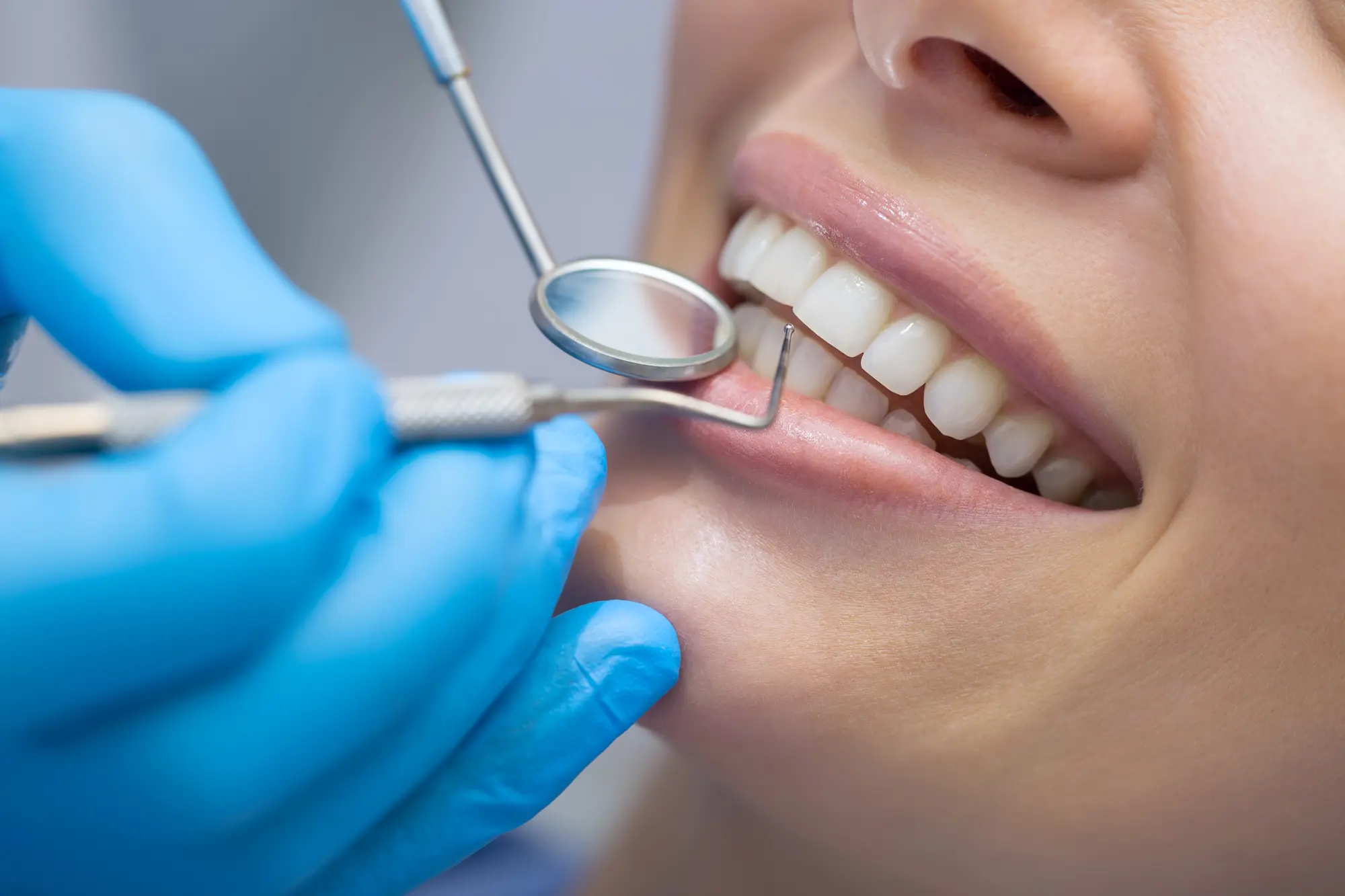
Part of the reason the cleaning interval matters so much is that what happens at those appointments goes well beyond what most patients realize. A prophylaxis at our office involves:
- Supragingival and subgingival scaling to remove calculus deposits that have mineralized onto root and crown surfaces
- Selective polishing to remove extrinsic stain and residual biofilm
- Periodontal charting to monitor pocket depths and attachment levels over time
- Radiographic evaluation on a schedule appropriate to your risk level
- A full soft tissue examination, including an oral cancer screening
- Personalized home care recommendations based on what we observe in your mouth, not generic advice
This isn't a routine maintenance task, it's a diagnostic appointment with a preventive treatment component. The clinical data we collect helps us intercept problems early and build a longitudinal picture of your oral health.
How Home Care Fits Into the Equation
The interval between your professional cleanings is only as effective as your daily oral hygiene routine. Brushing twice daily with a fluoride toothpaste and cleaning between the teeth at least once a day with floss or an interdental brush disrupts the biofilm before it can mature and mineralize. In patients who are meticulous about this, the rate of new calculus formation is genuinely lower, and the hygiene appointment is more of a fine-tuning session than a rescue mission.
For patients who struggle with home care, whether due to manual dexterity issues, orthodontic appliances, or simply inconsistent habits, the cleaning appointment carries more of the therapeutic burden. The takeaway isn't to skip home care because you're coming to see us anyway. It's that both components are essential and work synergistically. One does not replace the other.
Schedule Your Cleaning at Doral Select Dentistry in Miami, FL
At Doral Select Dentistry, Dr. Quiñones and Dr. Camino take a personalized approach to preventive care, meaning your recall schedule is based on your actual clinical picture, not a one-size-fits-all protocol. Whether you're overdue for a cleaning or simply want to know whether your current schedule makes sense for your situation, we're here to give you straightforward answers and exceptional care. Call us at (305) 786-5956 or request an appointment online to get started.


.png)


